Saturday, July 17, 2010

To Market, To Market Six


Today's market buys ($25.00):

1/2 gallon of 2% cream on top milk - $3.75
(From Way Back When Dairy in Jacksonville, TX. Promising "Low Temperature Pasteurized. Non Homogenized. No Antibiotics. No Genetically Modified Grains or Soy Products Used. No rBST. No rBGH.")

1 Asian cucumber - $1.00

1 cantaloupe - $4.00

1 basil plant - $2.00

1 mint plant - $1.00

2 yellow peppers for stuffing - $4.00

1 bag baby squash - $2/lb.

1 bag tomatoes - $3.00

1 bag heirloom beets - $3.00


The Empty Fridge

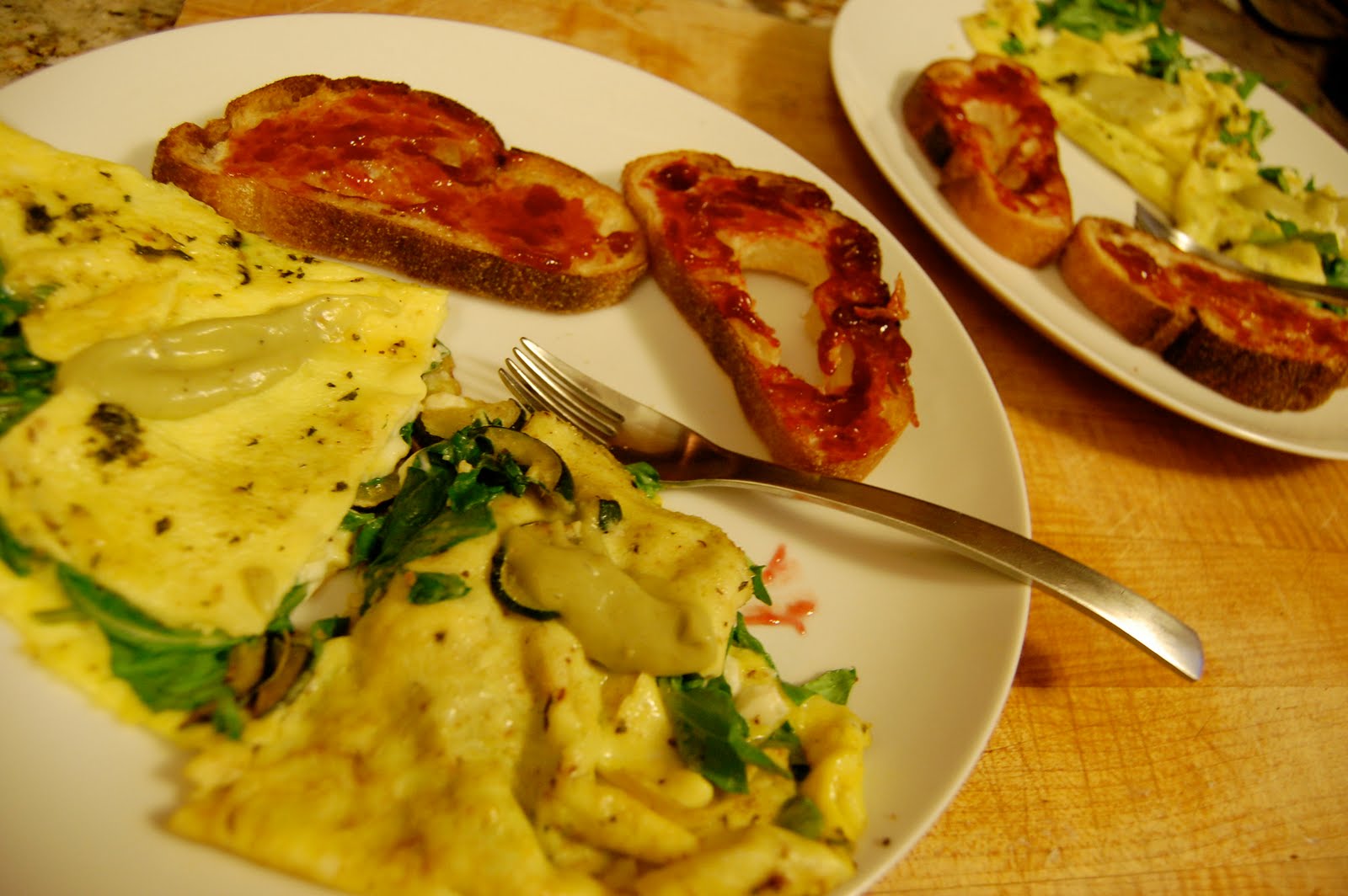
In my refrigerator last Wednesday: one zucchini, a bag of arugula, eggs, bread, the last drops of milk, butter, feta cheese, jam, orange juice

From the pantry and yard:
rosemary, salt, pepper, garlic

Some people call it brunch. I call it dinner on an empty fridge.


Monday, July 12, 2010

An Open Letter to David Bowie

Dear David Bowie:

Some people might not think that your music is an obvious choice for 4th of July, or for a day spent in a boat out on a lake. Those people would be wrong.

One of the best days I've had since moving to Austin was spent out on Lake Travis this past 4th of July--listening to you.

I was with my husband (who went by Captain Ron that day); my friend Alicia, who I have been friends with since I was eleven; Alicia's boyfriend Kevin (both in from BR); Alicia's college and post-college roommate, Liz; Liz's boyfriend, David (both in from Chicago); and finally, with my friends Leigh and Corey (also in from BR), who I became friends with while in graduate school--the first go round (circa 2002), but who Chris and I have known for much longer.

Someone among us, sleepy after having woken at the crack of dawn to drive an hour out to the lake, had the good fortune of being alert enough to notice--before we departed--that the boat we were renting had a CD player. Someone else made a mad dash from the dock back to the car for Kevin's CDs. On the boat, someone else had the inspiration to pick out Bowie. All Bowie. All day. I was not responsible for any of these actions, which makes me realize how important it is to have good and collectively sensible friends.

You rock, David Bowie. You rock in a car. You rock on a boat. I'm sure you rock in space too, and if I ever encounter any astronauts, I'll ask them to confirm that you rock the universe. I am a big fan. You probably don't know this, but we are both Capricorns.

Thank you for making music. I will listen to you with a blue sky above and blue water below on any 4th of July. Who needs firecrackers?

Yours, truly.

P.S. The person who keeps this blog, Pushing Ahead of the Dame, is probably a bigger fan of yours than I am (or crazier than I am), but I remain loyal.

P.P.S. If you have never listened to yourself while on a boat, take your protein pills, put your helmet on, click "play" below, close your eyes, and pretend the way that a five-year-old pretends. If you lack imagination (shame), but if you have time and access to a boat and a body of water, go out and try it for real.

Sunday, June 13, 2010

Sometimes the Kitchen Gets Dangerous and Dirty


Chris has had this oven-microwave-dishwasher safe lid and the pan that it goes with, not pictured, for 14 or 15 years.

The other day I was making stir fry with the last of our market goodies, carrots, broccoli, tomatoes, oyster mushrooms, onions, and garlic. I deglazed the pan, put the lid on it. I turned my back and heard an explosion.

We ate a back up meal.

RIP old lid.

Wednesday, May 26, 2010

Feast

In July of 2008, just before I left Louisiana, I wanted to pay homage to a landscape and culture that I love deeply. On my mind, I had hurricanes and the nation’s inability to comprehend why south Louisianians infringe, as a way of life, stubbornly, proudly and dangerously, on flood zones and delicate wetlands. A month later, Country Roads Magazine published “Liquid Assets,” in which I tried to capture a snapshot of fishing camp culture.

Rereading the story today, I see it was a weak attempt to capture a big, big love. And hurricanes seem like small beasts compared to BP and the oil industry in general. The voice inside of me screams, “BP, clean up your f*ing mess.” Those words don’t make it out of my mouth.

We had dinner with friends recently, two more ex-Louisianians come to Austin. I said to them, rambling, pontificating, and asking forgiveness after:

Do you remember taking Louisiana history in 8th grade? Learning that when the Acadians first came from Nova Scotia, their need to adapt to the landscape gave rise to Cajun food, to an entire heritage? Remember learning that Creole cuisine came about similarly, when Europeans and natives to Caribbean islands adapted their culinary traditions to ingredients found in our landscape?

This oil spill won’t be over in a year or a few years. Its aftermath will be nothing like the aftermath of a hurricane, even of Katrina. Louisianians are going to have to adapt entirely and permanently. This is a massive cultural upheaval. We're not going to know precisely what our new culture looks like until 10, 15, maybe more years down the road.

My mother-in-law, on the phone yesterday, sounded weary. I asked about her camp in Cocodrie. “It’s not looking good. We haven’t been down, but we’ve talked to neighbors. I don’t know when we’ll make it down again. Even if we do, I don’t think we can catch crabs or fish off our pier like we’re used to doing.”

I remembered my first time at their old camp in Stevensville. There too, off of Four-Mile Bayou, they caught and boiled blue crabs. I sat with Chris’s family around a table covered with newspaper, steaming crabs poured and piled over the paper. My mother-in-law can peel crabs faster than her husband, her son (a skill about which Chris brags on his mother), her stepchildren and grandchildren. That late afternoon, she tried to teach me her tricks. Maybe she held out hope I’d learn; probably she just wanted to impress and tease me. There were a lot of both. I was a slow peeler. My mound of shells was paltry compared to everyone else’s. At the end of dinner, she took pity on me and shucked a few crabs, piled the meat high in front of me. I rested my clumsy fingers and swallowed down fresh, sweet crabmeat, now and again dipping it unnecessarily in warm butter while mosquitoes bit at my ankles, legs, bare arms. A backwater feast.

Generations of one family sitting together on the porch of a fishing camp situated along muddy bayous, or high up on stilts and overlooking bays that lead out to the Gulf, everyone eating a fresh catch of fried or broiled speckled trout, what will become of an ordinary summer Sunday as this? What of fishermen and shrimpers who supply, not just the state, but the nation? What of oyster harvesters, ironically, growing oyster colonies on old, unused oil rigs? What of men who, as their livelihood, take people out on gulf fishing expeditions?

BP, clean up your mess. But then what? I cannot help thinking that while Louisianians have a lot of work ahead to reinvent a culture, the oil industry will swoop in like vultures to become a much larger presence than the large presence it has already been.

Last Christmas, my mother-in-law made her traditional Christmas gumbo. I am always fingers-crossed that she'll do a seafood gumbo full of crabs caught at the camp and frozen for just this occasion, local oysters purchased from Tony's Seafood, side-of-the-road shrimp, also frozen and saved for the occasion, or every now and then, her own bounty from a summer shrimping trip.

In St. Charles Parish in the 1950s, Exxon oil refinery built employee housing that included a movie theater, weekend dances, a company sponsored community that swept residents and politicians off of their eager feet and provided jobs and the good life, all drenched in oil. Here we go again? Oil companies can pick at the bones of a state's ruined heritage, but people cannot eat oil, if sickly brown pelicans are any proof.

The Country Roads story, "Liquid Assets" is below.

Liquid Assets by Herpreet Singh

From Country Roads Magazine, August 2008

"Waterfront camps are hard to come by,” Meg Mourain tells me, traces of her Acadian accent slipping through the telephone line. “I’ll tell ya what you do. You wait ‘til a hurricane comes through, and you look for the guy who looks like, ‘I’m so tired out. I don’t feel like doin’ this again.’ Like he can’t stand to rebuild one more time. That’s when you can get yourself a place on the water.”

This is how Meg’s late father, Dan Regard, acquired waterfront property on Vermilion Bay in Cypremort Point, not for himself, but for his best friend. The Regards have owned their camp on the bay since 1977. When Hurricane Andrew hit in 1992, Regard (called “Pop” by his family) spoke with a dispirited neighbor whose property had been leveled. The men sealed the deal on a paper napkin. Pop called his friend, “I just got you a place on the water, but if you don’t want it, I’ll hang on to it.” The friend jumped at the opportunity, and ever since, the Regards have spent weekends at “the Point” in the company of their long-time-family friends.

Meg’s anecdotes begin to express the contradictory vitality and natural volatility that shape coastal fishing camp culture, but articulating experiential heritage is challenging.

Eleven years ago, I visited a fishing camp for the first time. My now in-laws had a place in Stevensville on Four Mile Bayou. I’d heard of people, “going to the camp for the weekend,” but I had no clear image of what a camp would look or feel like. I discovered that often, camps are just tiny shacks or doublewide trailers transformed into cozy waterfront cottages. During that first visit, I found myself less interested in the actual structure of the camps, and I wondered more about the space that camps occupy in the life of Louisiana’s people and its culture.

Just before dinner, my mother-in-law walked to the bayou edging her front yard and lifted a metal trap crawling with blue crustaceans. As simple as that, our meal included boiled crabs. And as simple as that, I felt connected to the swamps of my extended landscape, one that had before been no more than a backdrop.

Since that visit, and as a nearly life-long Louisianan, I’ve wanted to decipher camp culture. The subject lures me because it is rooted in a larger ambiguity: I have hoped to better comprehend our ability to live in Louisiana, both nonchalantly and resiliently, with water.

Driving I-10 west over the Atchafalaya Basin this July, I felt astounded to witness treetops emerging, not from long, narrow trunks, but instead from an expanse of deep water – the unseen wooden trunks submerged beneath. It occurred to me that south Louisianans, like the Louisiana cypress and like the iris, are inextricably and poetically, of both earth and water.

At the Bon Creole Lunch Counter in New Iberia, I met Meg’s older brother, Jady Regard, and their mom, Margie Regard. We ate shrimp and soft-shell crab poboys while the duet granted me a glimpse into their own camp life.

After Pop purchased the camp on Vermilion Bay, he drove Margie down to see it. She was a mother meeting the demands of three young boys, and when she laid eyes on the wooden structure, she cried. It needed a lot of work, and she remembers, “It had mushrooms growing all over the walls.” But once it was theirs, they set to remake it.

Comprised of three buildings erected in 1930, it was Cypremort Point’s oldest camp. Pop named it “the Piddler Crab,” and the Regards spent nearly every summer weekend there. Rituals arose including a “pie day” each Good Friday, when neighbors bring over pies and eat them all day. Pop barbequed every Friday. The boys sailed and fished. Meg rode around with friends on her wave runner. She says, “Nobody ever went alone. You always brought a friend. There were lots of sleepovers.”

In 2002, a year after Pop passed away from liver cancer, and long after Margie had stopped crying about the Piddler Crab, Hurricane Lili struck. It was the deadliest and costliest hurricane of the season. The Piddler Crab had weathered hurricanes in the past, but this time, it was a complete loss. Meg remembers, “I had never lost anything in a hurricane before … I know it’s just a house and people shouldn’t get upset about material things, but I felt devastated and just cried and cried.” Asked if they considered walking away from the Point, Meg responds, “There was no question we were rebuilding.”

When the Regards did rebuild, they realized that the camp’s original layout had functioned exactly as they needed. They kept the old layout and simply grew the camp to accommodate seventeen people. The camp has a set of French doors that separate the waterfront side from the backside. The Regards cool the back of the house with the air conditioner, but open the French doors so the front of the house opens to the porch. This provides a temperate transitional space. When a person gets out of the cold water, he can dry off on the porch and move to interior living area. When he’s good and hot, he can move to the back of the house to cool down again.

The design also functions well because the screened in porch is fifteen-feet wide and wraps around three sides of the camp. The grandkids run and play without the adults worrying that they’ll fall into the water. Margie comments, “When you’ve got kids and a camp on the water, it’s a big concern.” Finally, Meg boasts about the tiki bar that occupies a corner on the porch. Two glass-paned garage doors on both sides of the corner close it off when the weather gets bad. When weather is pleasant, the doors are raised.

Jady recalls that in ’seventy-seven, when he was nine years old, Vermilion Bay was just a fishing hamlet. Meg says the Piddler Crab is a perfect example of how the Point has changed over time, “It used to be the oldest camp, but now it’s one of the newest. Lili was very destructive, and because of the new laws, camps are now eighteen feet high.” When it was erected in the 1930s the camp hovered only three feet above water. Meg observes simply, “The whole skyline has changed.”

Jady points to another shift, “A lot of these camps are in their third and fourth generation,” leading ownership to switch hands, and in some cases, leading to camp sales. Of this predicament Jady says, “I see us trying to find a way to keep it in the family and have it be accessible to all the kids.” Margie has seven grandchildren and an eighth on the way. Every summer her grandkids spend time at Piddler Crab for a week the family calls, “Camp Mimi,” referring to Margie’s grandmother-moniker.

Ten-year-old Michael Regard is the eldest grandchild, and he lives in Kentucky. He speaks decisively of his favorite memory from visiting the Piddler Crab. “A few years ago we were in the water and saw an alligator swimming. We tried to catch it, but it got away… My two brothers, my mom and dad, Aunt Meg, Uncle Jady and Mimi were all in the boat.” Catching the alligator—or, not catching the gator, was a family affair.

Michael’s near-catch strikes a familiar chord. Earlier this summer, I traveled to my in-law’s new camp in Cocodrie for my first fishing excursion. My father-in-law drove an hour out by motorboat, and quietly pulled into an inlet. To the best of my ability, I imitated my mother-in-law’s manner of casting a line into the water. Frustrated that I wasn’t casting quite right, I asked my husband to throw my line.

As we returned each other’s poles, he realized I’d hooked a speck on his line. “Reel it in!” he urged. I reeled, but awed by the thrashing silvery-white fish, I held the pole over the water for too long instead of swinging it quickly into the boat. The trout muscled his way into the water again. Later, my mother-in-law winked, “He was THIS big, right?” I joked the rest of the weekend, “I almost caught a fish. He was THIS big.” Each telling, my arms grew wider apart to demonstrate. Yet, the innate significance of Louisiana camps isn’t the fish.

Margie Regard cried when she first laid eyes upon the Piddler Crab. Now, she’s tender toward her husband’s ramshackle waterfront purchase. She says if she had to, she’d choose the camp she works hard maintaining over her home in New Iberia. Jady chimes in, “Me too.” His mother looks at him, “Really?” She pauses, “I’m glad.”

The magic of Louisiana camp culture isn’t the fish. It isn’t near alligator-catches. Pop, in his purchase of a mushroom-blooming 1930s-era camp that required work, weathered storms and ultimately was destroyed to be built anew, left his family with the real legacy of camp culture, a labor of love.

Weathering hurricane after hurricane, it might appear that Louisianans have an audacious attitude toward our liquid landscape. We must perpetually ask ourselves: Are we negligent to work, live and sport, for generations—for centuries, inside of flood zones and at the shores of lapping coastal wetlands? Are we delusional to believe that as human beings we can both commingle with and manage water? Certainly, we’ve proven we don’t always manage well.

Yet, coexistence with water is engrained in our geography, history and economy. It comprises our culture, and shouldn’t it? At 7721 miles long, given every bay, inlet, and promontory, our undulating shoreline is exceeded in length in the United States only by Alaskan and Florida shorelines.

Louisianan’s attitude toward our liquid environs is not one of audacity, but of love. When we infringe on flood zones, we remember, love is sometimes expressed impulsively, recklessly. Yet love is accommodating; it leaves space to protect from disaster. As new camps transform the skyline, rising higher above water, we recognize accommodation in a marked way. Love is also patient and faithful, so we rebuild when disaster destroys. Owning a commitment to weather the next great storm, we anchor camps in place along the same shores they anchored yesterday.

This inextricable connection, the way we live with water and an unpredictable coastal environment, it is as stalwart as family ties.

LINK TO STORY: Liquid Assets

Friday, May 21, 2010

Blog Vacation, Coming to an End

Next week, I'll be blogging again - from the kitchen in my new house! Here's a treat for now.

Sunday, April 18, 2010

Springtime Saturday

Daytime, drinking a Mexican Coke and eating a John D. Rockefeller burger stuffed with pepper jack cheese and topped with sauteed spinach and artichoke hearts at Your Mom's Burger Bar.

Nighttime, a walk down to Antone's to see The Heartless Bastards. Two words for Erika Wennerstrom: bad ass. And she plays a really pretty guitar. One word for the drummer: Hot. Except his mouth gapes open when he plays. Less hot. He also plays a really pretty set of drums.


Sunday, March 28, 2010

To Market, To Market 6

1 dozen eggs
1 gallon 2% milk (low pasturized and from hormone-free, grass-fed cows!)
1 center cut pork chop (grass and whey-fed)
broccoli
carrots
bokchoy
lettuce

Sunday, March 21, 2010

Rock n Roll Tacos

We didn't make it to the market this weekend, but the food and music went on. We crawled underneath of a taco truck to get into a show we wanted to see. I'm getting ahead of myself.

This past week, Austin hosted SXSW, during which film-folks, bands, and hipsters descend upon the city like there's an alien invasion.

Friday evening, Chris and I rode our bikes to Lustre Pearl to see what we'd heard would be a good lineup. We waited in line for 30 minutes, finally got in, and caught a band called Rogue Wave. They wrapped up around 7:30 and, since they were pretty good, we felt hopeful about the rest of the night. The next lineup, which didn't begin until 9, included She and Him and Broken Bells. But after Rogue Wave ended, everyone who didn't have a SXSW badge was kicked out.

What to do?

We rode east to the Shangri-la where no badges or wrist-bands were required, stood outside, and watched a Japanese group. I never got their name, but they were - in look, sound, and stage presence - the equivalent of an American, pop-punk boy band. I imagine that they occasionally make appearances on Saturday morning shows geared toward ten year olds and on Japanese game shows. They were entertaining, though the photo doesn't do them justice.

After that, we left to get food at East Side King, one of Austin's trailer eateries. East Side King is in the courtyard at Liberty bar. My favorite items so far are the beet home fries and the steamed bun stuffed with pork belly. While we ate inside (where it was warm), one of our friends went out to listen to the band. He reported that they got belligerent: "I guess since we're from Palm Beach, you think it's okay not to pay attention." I kinda wish I'd witnessed that quip.

Chris and I started to ride our bikes home, but we made one last stop at Lustre Pearl. She and Him were playing. We squeezed our way to the front of a crowd standing outside of a metal gate that encloses the courtyard. There was Zooey Daschanel singing and looking as cute as ever in that slightly annoying and slightly charming way. When the set ended, she didn't say a word to the audience, which knocked her down a couple of notches in my book. Zooey, talk to your fans.

While we waited for Broken Bells to start, we chatted it up with the 20 year olds around us, speculating that we could all get into the courtyard if we crawled underneath of the taco truck that serves as a continuation of the gate around the place.

Finally, I said to Chris: "I dare you to do it."
He looked at me for a second, thinking.
I stared back. Silence, while I sent mental telepathy: Come on, yahoo-Chris-who I dated when I was 22, do it.
Chris: "Okay."

He shoved his bag into my hands, scooted around to the back of the truck, and crawled under while I stood with the 20s and waited. Someone said, "I see a hand." And there it was, poking out beneath the lip of the truck like a crab claw skimming solid dirt ground.

20 year old guy (looking big-eyed and amused): "He's gonna freak that woman out who's standing there ordering when he pops up from beneath her."

Chris says she caught his eye, and he put his finger to his lips: "Shhhh."

20 year old girl next to me: "Are you with him?"
Me: "Yeah. He's my husband." If I'd thought for two more seconds, I would have said: "Never met him."I walked around and, in my dress and sandals, slithered under the taco truck to join him. Yes, I worried about messing up my dress, even though I tried to act like I didn't care.

I emerged on the other side, and Chris said, "Hurry. The guy in the taco truck just walked over and told the bartender people are sneaking in under the truck." We submerged ourselves into the crowd asap.

Chris: "I was just talking. I wouldn't have done it if you hadn't dared me."
Me: "I wanted to do it, but I knew I wouldn't unless you had already done it."
Chris: "I did it because I wanted to show those 20 year olds the world is their oyster."

We are so wise. Right?

Me: "We're so rock n roll."

When the show ended and the next band was setting up, we looked at each other.
"Do you wanna stick around?"
"Well, let's just wait until they start. We can listen to a few songs."
"They look 12."
Band: "Check. Check. Check."
"They're annoying me."
The first song started.
"I'm tired."
"Me too."
"Let's go home."

Oh. We're so old.

Today on the radio, some guy said that the new album by Surfer Blood is the best rock n roll album out there right now. But we're okay having missed them. There's a WHOLE lot we did not see, but at least this year SXSW didn't feel as overwhelming as it felt last year. Now that we have a feel for the festival, next year we'll be like old pros with little personal schedules of must-sees written out for ourselves. Maybe. Or maybe we'll wing it again.

Here is a link to an NPR story about Broken Bells; they've included 3 songs with the interview, so listen. It's good!

A few other links:
East Side King (The trailer eatery at the Liberty courtyard.)
Bomb Tacos (The truck at Lustre Pearl, where, in fact, the tacos ARE the bomb, and the site from which I swiped credit the photo at the start of this post.)
Lustre Pearl (One of the few places in Austin that gives me New Orleans deja vu.)